
The Mirror Between Fiction and Reality
The Book of MirrorsThis flow follows the novel’s repeated crossings between invention and fact, culminating in a reader’s recognition that every account reflects its teller.
increasing Bearing strength in each event
 decreasing
Bearing strength in each eventdecreasingThe Reader Meets a Manuscript
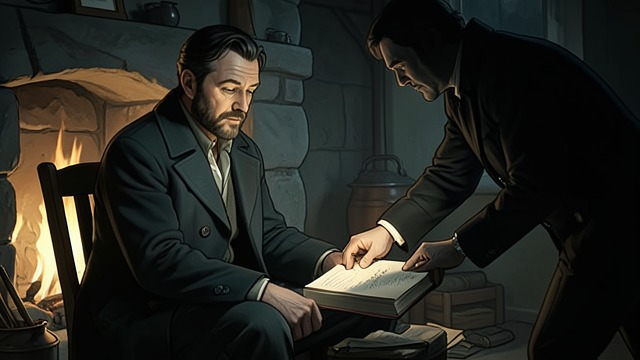
A Confession or a Novel
The Submission’s Promise
Peter Katz reads Richard Flynn’s query as unusually intimate and persuasive. Flynn claims to have recovered the truth about an old murder and presents his manuscript as a personal testimony, yet the literary polish makes its status ambiguous: it may be confession, memoir, or carefully designed fiction.
The Agent’s Projection
Katz begins imagining the book’s commercial possibilities and possible endings before he has the full text. The fragment itself encourages this speculation by ending at the instant Flynn sets out for Joseph Wieder’s house. The missing continuation becomes a blank into which Katz inserts theories of jealousy, murder, and exposure.
The opening turns reading into an act of interpretation that resembles investigation. Katz is not only receiving a story; he is constructing one from what the author gives him and what the author withholds. The novel’s form makes that interpretive desire part of the subject rather than a neutral frame around it.
The Manuscript in the Wall
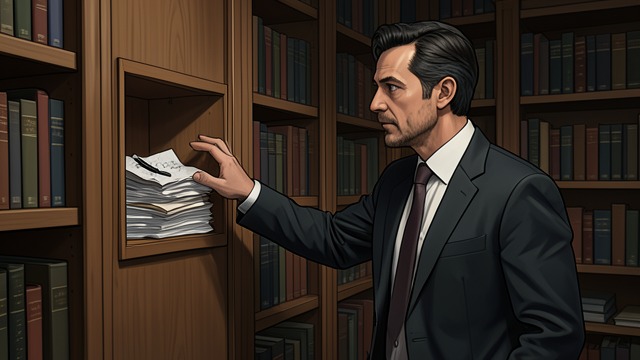
A Hidden Text
Discovery and Restraint
Richard Flynn finds an untitled manuscript concealed behind a false wall in a cupboard in Joseph Wieder’s library. Its pages carry different kinds of writing and revisions, suggesting a layered work whose author and purpose are not immediately clear. Flynn reads only a little and returns it to the hiding place.
A Clue Without a Solution
The discovery connects the secret of Wieder’s research to the novel’s broader concern with authorship. A text can exist materially yet remain inaccessible as a complete account: its missing title, multiple hands, and concealment make it an object of speculation rather than an answer.
The hidden manuscript also anticipates the later disappearance of both Wieder’s book and Flynn’s account. In this story, books promise to preserve truth, but their physical survival, authorship, and meaning are all uncertain. A manuscript may be hidden, appropriated, misread, or withheld by someone who has a personal stake in its story.
The Investigator as Storyteller
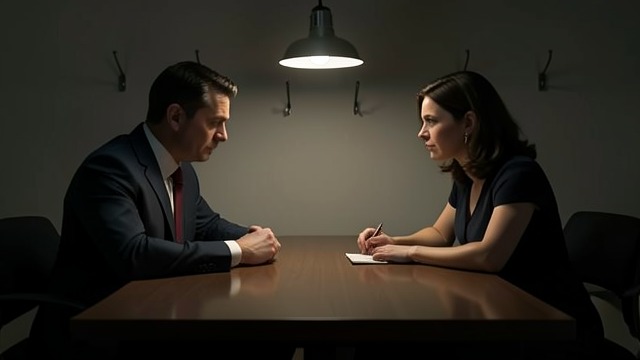
Reconstructing an Absent Book
A Reporter’s Task
John Keller agrees to investigate the missing continuation of Richard Flynn’s manuscript and the murder of Joseph Wieder. He has no complete book to verify and no single witness whose account can settle events. Peter Katz asks him to recover the story from archives, interviews, and the fragmentary manuscript.
The Risk of Completion
Keller’s assignment includes the possibility of reconstructing the unwritten portion if the original manuscript cannot be found. That proposal makes him both researcher and potential author. The need for a coherent account may tempt him to turn conflicting fragments into a smooth narrative that outruns the evidence.
Keller’s investigation exposes a central danger in true-crime storytelling: an account can feel complete because its pieces have been arranged elegantly, not because uncertainty has actually disappeared. The work of writing must therefore be distinguished from the work of proving, even when both depend on the same evidence.
Stories Made from Evidence
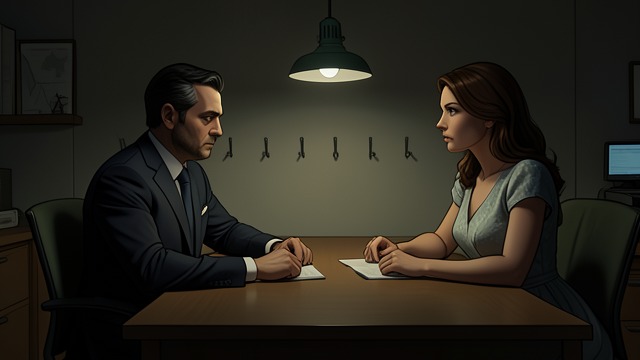
Versions Compete for the Past
The Same People, Different Plots
John Keller hears radically different accounts of the relationships among Laura Westlake, Richard Flynn, Joseph Wieder, and Timothy Sanders. Laura denies a romance with Flynn and presents him as an obsessive harasser; Sarah Harper describes Laura as calculating and says she manipulated those around her. The witnesses turn shared names into opposing characters.
Evidence That Does Not Decide Motive
Keller discovers that the first chapter of Laura’s book closely resembles Joseph Wieder’s submitted proposal. The resemblance may indicate appropriation, collaboration, or a more complicated exchange. It is significant, but it cannot by itself prove that Laura killed Wieder or that Flynn helped her.
The investigation shows how evidence can establish a connection without establishing the story that explains it. Each narrator selects details that support a motive and leaves others uncertain. The reader is asked to resist converting suspicion into fact simply because one version offers a satisfying plot.
The Mirrors Remain
No Account Stands Alone
Revised Judgments
At the epilogue, Peter Katz recognizes that the earlier explanations cannot all be true. Richard Flynn may have been wrong about his relationship with Laura; Derek Simmons misread events; Joseph Wieder’s intentions remain contested; and the surviving accounts still leave parts of the past unresolved. The complete manuscript arrives too late for its author to answer questions about its final claims.
The Reader’s Reflection
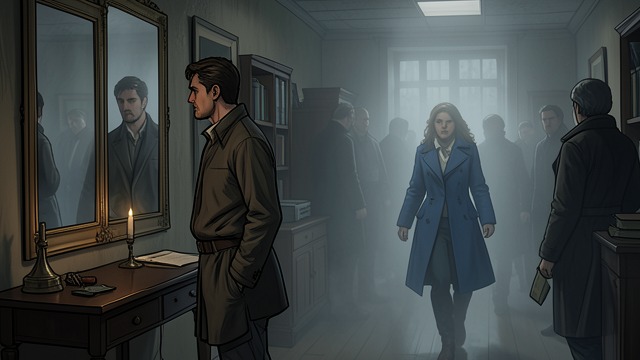
The novel’s mirror image describes a broader failure of perception: people look outward but see their own obsessions reflected back. Characters and investigators mistake interpretation for observation, while readers are encouraged to revise their own judgments as new testimony alters the scene.
The final effect is not a denial that facts exist. Rather, it is a warning that facts reach others through partial memories and authored accounts. The act of reading becomes another mirror: a story can disclose something true while also revealing the desires and assumptions through which it has been understood.
January, when Peter Katz receives Richard Flynn’s submission
December 1987, while Richard Flynn organizes the library at Joseph Wieder’s residence
2007, when John Keller accepts Peter Katz’s assignment
During Keller’s investigation, after interviews with Laura Westlake and Sarah Harper
At the final epilogue, after Peter Katz receives the complete manuscript
